v
v lets you enter data in up to 3 lists. Each list can contain up to 42 items. Press % # to go to the top of a list, and % $ to go to the bottom of a list.
List conversions accept f³´d, ´%, ´Simp, and n/d³´Un/d.
Numeric notation, decimal notation, and angle modes affect the display of an element (except fractional elements).
Example
|
L1 |
v 1 P 4 $ 2 P 4 $ 3 P 4 $ 4 P 4 < |
|
|
Conversion |
" v " |
|
|
|
< |
|
|
|
v < % j |
|
|
|
< |
|
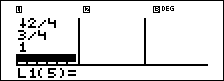
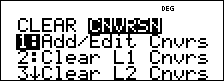
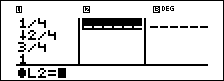
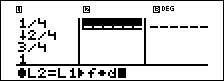
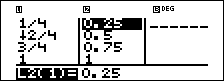
Notice L2 is calculated per the conversion you entered, and L2(1)= in the author line is highlighted to indicate the list is the result of a conversion.
³ Problem
Find the decimal representation of  ,
,  , and
, and  . From this pattern, can you predict the decimal representation for
  ? Check your answer using the lists on the calculator.
|
v v 4 v " 5 |
|
|
1 P 9 $ 2 P 9 $ 3 P 9 < |
|
|
" v " 1 |
|
|
v 1 % j |
|
|
< |
|
|
Input the rest of the fractions to test your pattern. Notice L2 updates as you enter in L1. |
|
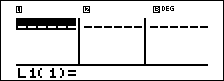
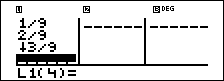
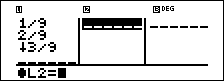
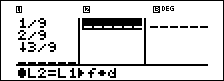
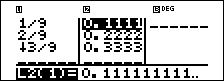
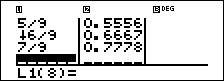
The pattern appears to show that the decimal representation is a repetition of the number in the numerator for ninths. Entering  ,
,  ,
,  and finally
  validates that statement. Notice the last digit in the list is rounded, so 0.777777… is shown rounded to 0.77778.