How early do you start training pre-service teachers to teach with
graphing technology?
|
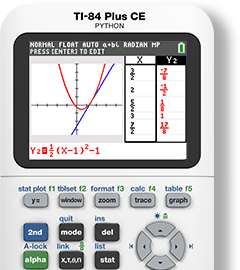
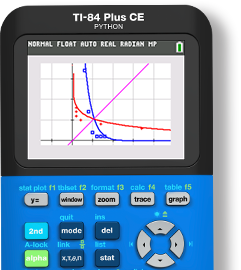
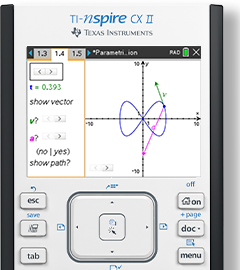
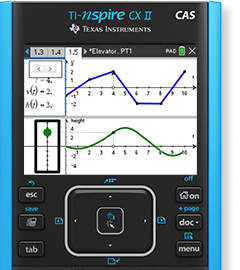
That's a great question, according to Mike Iannone, professor of mathematics at The College of New Jersey located in Trenton, N.J. He's been instructing pre-service teachers since 1968 and during the past 40 years has amassed extensive experience with graphing calculators, spanning from the first models introduced in the mid-1980s to TI's most recent technology - TI-Nspire™ handheld.
A look at the teaching practices at The College of New Jersey presents valuable insight concerning when and how pre-service teachers should begin to incorporate graphing technology - not only in the study of mathematical concepts but also as an instructional tool. Among the college's approximately 6,000 undergraduate students, about 25 percent are pre-service teachers attracted to the college because "we have been successful in placing our graduates into the education field in desirable positions," Iannone says. At most other colleges, pre-service teachers account for closer to 20 percent of the total population.
|
| Learning math concepts comes first
|
A student's first collegiate exposure to graphing calculator technology typically begins in their first Calculus course, where learning the mathematics is the main focus and the handheld serves to assist the critical thinking process, according to Iannone.
For example, "In Calculus, our goal is to give students a full understanding of the function concept, including the processes of evaluating, graphing, solving, differentiating and integrating," Iannone explains. "All the tools you need to do this are on today's graphing calculators. You still teach a concept by paper and pencil, but the graphing calculator allows you to explore a larger variety and more sophisticated set of problems.
"Another example: the graphing calculator zoom feature makes it easy to see small segments of a graph and identify hard-to-find attributes that demonstrate the need for analytical solutions. Students see the value in this and begin to realize the contribution the graphing calculator adds to their understanding."
In addition to Calculus, most students at the college take a Statistics course in which many faculty members use graphing calculators that include numerous statistical capabilities in their classroom.
"With the built-in routines available, students are better able to investigate probability and statistical properties to enhance their understanding," Iannone says. "For example, in my class I typically overlay a normal curve over a binomial distribution scatter plot to demonstrate the relationship between the two distributions."
|
| Then how to teach with the technology
|
Teaching these mathematics techniques with the aid of today's technology clearly enhances the ability to develop better understanding among students, according to Iannone.
"The use of technology creates exposure early for pre-service teachers as to the capabilities of a graphing calculator and gives them an early start in determining whether it's a teaching tool they will be interested in using when they graduate and begin their teaching career," Iannone adds.
In the sophomore year, pre-service teachers enter the field by taking an observation course to watch current math educators teaching in the classroom environment. Two methods classes follow: Middle grades in junior year and high school in senior year.
"With most of today's schools utilizing technology, observation courses let the pre-service teacher see in-person how a certified teacher utilizes graphing calculators," Iannone says. "This might encourage the pre-service teacher to use the same instructional techniques on their own when they get to their first school.
|
| Most of all, timing is everything
|
"A question I often get is 'When do I start to allow my students to use graphing calculator technology as a problem solving tool?'," Iannone says. "The general answer is when you feel comfortable that they understand the concept fully. It is important that students understand the mathematics first. Only then is it appropriate to allow graphing calculator use to solve problems"
Of course, not all college math professors opt to incorporate graphing technology in their teacher preparation program. Academic freedom and autonomy prevails in most - if not, all - college mathematics departments. Professors who learned concepts by pencil and paper often expect their students to learn in the same fashion.
"It (graphing calculators) just seemed like a natural thing to incorporate into my classes and changed the way I taught" he explains. "How I learned, basically doing most computations with pen and pencil, was time consuming and limited the number of problem solving strategies utilized. Graphing technology allows for ease of computation and conceptual understanding, as well as making it easier for students to discover mathematical connections on their own. Paper and pencil computations no longer get in the way."
|
| The benefits of having tech-savvy students
|
Yet before Iannone could get to this point, he had to grasp the functionality of the technology himself - with a certain amount of determination (perhaps an understatement).
"Training sessions were few back then," he recalls. "The technology companies had these big manuals and I would sit and work though it. I stuck with it because I saw the tools as a way to enhance the way I teach. I do think with newer technology (like the TI-Nspire handheld), making sure to train pre-service teachers is going to be essential as there is a learning curve to using any technology.
"Today younger faculty members come into their teaching assignments with an established understanding of the value of graphing calculators like the TI-Nspire handheld. They come to teaching assignments having utilized technology themselves during their schooling and are very comfortable in its use. Additionally, many people who make the decisions on staffing realize technology is essential to teaching math and look for faculty members who are willing to use it."
Another advantage for Iannone and fellow professors: High school students who enter the college with prior graphing calculator experience. Most high schools in the state of New Jersey use technology regularly in their mathematics classrooms - including graphing calculators - and incoming pre-service teachers perceive it as an accepted instructional tool.
"Most incoming students possess an understanding of the basic graphing calculator routines," Iannone explains. "They know the rudiments of using it, but do not have a real understanding of its full capabilities. In my classes, I help bring in a certain level of sophistication in its use. I can elaborate on certain nuances of the technology that students may not understand that assists them to develop better understanding of mathematics.."
Iannone further states: "With the TI-Nspire handheld being a relatively new teaching and learning tool for the mathematics classroom, I think it is important that pre-service teachers have exposure to this new technology. As a result, in the fall semester students in our methods classes were introduced to several TI-Nspire Geometry activities." Using a class set of TI-Nspire handhelds, students were provided with a compact alternative to computer software previously used for these same activities.
|
| Change is coming … and that's a good thing
|
"We had a pretty good success rate," he says. "Students preparing to teach mathematics need to understand the importance of technology and the tools that are available to them. They are well aware that when they go into their assigned school during their student teaching semester, they are likely going into one where some graphing calculator techniques are involved".
Technology has changed the way we teach mathematics, according to Iannone. "We have only scratched the surface" he suggests. "Today the new tool is TI Nspire technology, which contains all the features of the TI-84 Plus and TI-89 Titanium graphing technologies and much more. We need to keep our students current in the use of this kind of technology.
"In one of my classes, I will provide a TI-Nspire handheld to every student and ask them to use it during the semester. At the end, I will have a much clearer understanding as to student attitudes towards this new technology, as well as my own. In turn, I will be in a better position to share my thoughts on its use in the future"
|