When the revised curriculum features technology, educators want access, training and choice.
|
Interview with Christine Suurtamm
NCTM Board Member and Associate Professor of Mathematics
University of Ottawa
A recent study on the affects of greater technology use in a revised math curriculum revealed some interesting results as to which educational teaching tools are used most often by educators based on influential factors such as product accessibility, training opportunities and personal preferences.
In 2005, the Ontario (Canada) Ministry of Education announced a revamped math curriculum that would include, among other things, a greater presence of educational technology from 1st through 12th grades. A year later, a research initiative known as the Curriculum Implementation in Intermediate Mathematics (CIIM) project was launched to examine the impact on classroom practice.
“The CIIM project is a way to examine what it is that educators are doing and how these things have either helped or challenged them” explains Chris Suurtamm, Associate Professor of Mathematics at the University of Ottawa (Canada).
|
| What does it all mean?
|
| The project’s first report was released in August 2007. Feedback from numerous face-to-face focus groups, nine video-taped classroom case studies and a Web survey questionnaire completed by nearly 1,100 educators (more than 50 percent that teach 9th and 10th grade math) comprise the comprehensive research project.
“Part of the research was to obtain a sense of what teachers are specifically doing in their classrooms as well as to help the Ministry determine what it may need to do in the future to better support them,” Suurtamm says.
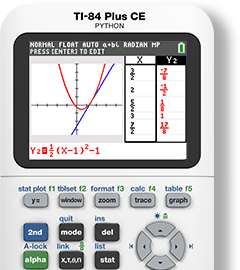
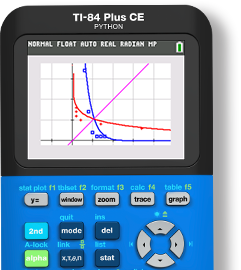
That includes incorporating most recently into their instruction the more significant use of interactive computer software for teaching Algebra, Geometry and Statistics. The number of graphing calculators has grown as part of the math curriculum since the Ministry allocated funds to schools across the province starting in 1999.
“You can introduce a new curriculum with new ideas and new ways of teaching, but that does not necessarily mean that it will happen exactly as planned or recommended,” Suurtamm says.
Take the CIIM research on the percentage of teachers who reported “never” using interactive geometry computer software endorsed by the Ministry and provided through a province-wide license:
|
| | Grade 7 – 46 percent |
| | Grade 8 – 40 percent |
| | Grade 9 Applied – 41 percent |
| | Grade 9 Academic – 38 percent |
| | Grade 10 Applied – 54 percent |
| | Grade 10 Academic – 53 percent |
 |
| “While this data also indicates that approximately 50 percent of teachers are using dynamic geometry software, math coordinators and other school officials responsible for teacher professional development would want the maximum 100 percent usage because curriculum documents indicate that students should be using this kind of tool,” Suurtamm says. “From focus group and individual teacher interviews, it seems as though teachers would need to book the computer lab a week or two in advance for interactive geometry investigations. It is not necessarily a tool that can be leaned on as a natural part of any lesson.”
|
 |
According to CIIM research, the percentage of teachers who responded “very comfortable” in using technology to teach mathematics nearly doubled from 7th grade to 10th grade.
|
| | Grade 7 – 22 percent |
| | Grade 8 – 24 percent |
| | Grade 9 Applied – 43 percent |
| | Grade 9 Academic – 42 percent |
| | Grade 10 Applied – 38 percent |
| | Grade 10 Academic – 40 percent |
 |
| “In grade 7, they do not have as much access to technology as compared to grades 9 and 10, in which it is required to use in the curriculum,” says Suurtamm. “However, when we combine the responses for ‘somewhat’ and ‘very’ comfortable in using technology, it’s an average of 74 percent for grades 7 through 10.”
|
| Simplicity is key
|
| For now, graphing calculators offer an advantage in terms of individual handheld portability, accessibility and availability at the retail store environment for direct purchase and the last nine years of Ministry-endorsed recommendation in the province’s math curriculum.
“The adoption of TI-83 Plus and TI-84 Plus graphing calculators was huge and TI had a lot to do with it,” Suurtamm says. “TI came in and conducted many workshops with teachers. How is it that they learn about new ways of teaching math? Workshops are a starting point. Our data also indicates that dialogue with colleagues is an effective professional development strategy.”
These factors help to increase the adoption of technology:
|
| | The ability to find a fellow classroom educator down the hall who may know a little more about the technology |
| | The opportunity during a lunch period to review a technology-enhanced lesson |
| | The support of the department head that might be able to offer productive one-to-one guidance |
| | Simple ongoing dialogue with colleagues also using the technology could even help alleviate any apprehension or hesitation by educators using the technology in their lessons |
 |
| “A lot of teachers are just not sure how it’s going to go, what questions are going to asked, what possible difficulty they may encounter,” explains Suurtamm. “They are nervous to try something new.”
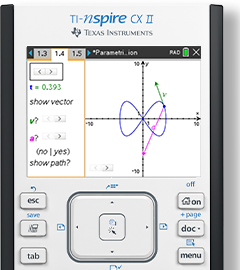
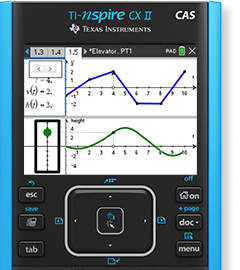
One such new technology is the TI-Nspire™ handheld and computer software, which combines enhanced graphing capabilities, computer features and the unique ability to display and explore multiple representations of a single problem all on one screen.
“More and more I am hearing of high schools moving to TI-Nspire technology,” says Suurtamm. “One advantage is that all the necessary applications are available in one device and they are integrated so that connections can be made as you move from one to another.”
|
| Perception is reality
|
The University of Ottawa’s pre-service teacher program presents a positive and productive gateway for building a future educator’s comfort and confidence with technology. Canadian students, who have already obtained a college mathematics degree, attend the university for eight months of specialized pre-service math content and classroom methods training.
“The students here are receptive, responsive and surprised that technology is part of the curriculum,” explains Suurtamm. “They often come in with certain ideas of how to teach math. What they encounter is a lot of “a-ha” moments. Since I only have eight months with students, I introduce the technology right away. In about the third week, they are using TI-83 Plus or TI-84 Plus graphing calculators and I give them activities to begin exploring.”
For example, a geometry exercise in which students construct an object such as a parallelogram and then name all the properties that can be found.
“I don’t teach button pressing,” says Suurtamm. “I try to teach the technology using a method I would like for them to be able to use in their future classroom.”
This winter, Suurtamm help a pre-service workshop highlighting TI-Nspire technology. Nearly 50 of her students attended.
“My goals are to get them ready for what they will see in the classroom now (TI-83 Plus/TI-84 Plus models) while creating continued proficiency with TI-Nspire technology,” explains Suurtamm. “Many high schools in the area are already using TI-Nspire handhelds.”
|
| All on the same page
|
| The province’s consistent message regarding technology in the curriculum helps drive this transition, according to Suurtamm.
“I think we are pretty unique in that our teachers are getting a common message anywhere they look – from NCTM, the Provincial Math Association, from the policy makers who work with the math education community to produce the curriculum,” adds Suurtamm. “All the way around, it’s coherent and we don’t have to deal with conflict. That makes a difference.”
So what does this research report mean for educators who are going through changes in their practice? Suurtamm has used it to inform the Ministry, which can then communicate with principals how to best support their classroom teachers. She has also worked with the district math coordinators in the province who are responsible for professional development to share the research and discover how this research can help with their work.
“The big picture in all of this: We have a curriculum that is fairly progressive and it appears that the province is doing well with its broad use of technology in the schools,” says Suurtamm.
|